Tag: sustainability

SM Prime Launches Manual for a Waste-Free Future

Limited number of copies have been printed in support of SM Prime’s sustainability efforts. A digital copy of the manual will be made available for download.

The SM Prime Holdings, Inc. (SM Prime) campaign for a Waste-Free Future and its Recyclable, Disposable, Compostable, or RDC model aims to make segregation simple, easy, and actionable. 

In the recent Sustainability Expo (SUSTEX 2025), SM Prime launched the SM Waste Free Future Manual – a playbook that encourages individuals and communities to learn about RDC and building better segregation habits. 

Small steps, big impact 

In the Philippines, the country generates up to 61,000 tons of waste daily and an annual 2.7 million tons of plastic waste. A figure that will rise with urbanization and poor waste disposal practices. 

Inspired by the SM Green Movement’s strong call to action to make sustainability part of everyday life, SM Waste Free Future invites everyone to become part of the solution. 

The three categories, RDC, make sorting waste an empowering exercise by focusing on the word “able” meaning having the power, skill, or the opportunity “to do”.  The manual’s easy, practical, and inspiring read hopes to encourage readers to do just that –championing segregation systems and proper waste disposal. 

It also features innovative reuse programs of SM Prime’s business units that keep materials in circulation and out of landfills. When done at scale, each contribution can inspire others to follow, creating a ripple effect.  

Learn, practice, champion

Done with great reflection during its incubation stages, SM Waste Free Future presented a rethink of waste segregation habits and systems built over time.

“We have to be open to new ways of doing things and of putting into action every little step that’s crucial for advancing waste management solutions,” said SM Engineering Design and Development President Hans “Chico” Sy, during the 2024 World Environment Day program launch. 

Today, the campaign is deeply encouraged by institutions and agencies that strongly advocate developmental goals. 

In his message of support, Dr. Selva Ramachandran, Resident Representative of the United Nations Development Programme (UNDP), lauded the RDC bin labeling system. “Proper waste segregation is an entry point toward a circular economy – one that goes beyond waste management to design out waste, keep materials in circulation, and regenerate natural systems.” 

All together now

Together, we are stronger than we realize. “This project is not specific to one organization, but one that belongs to an entire society. We welcome everyone to practice this in their everyday lives,” Sy said. 

To solve a mounting problem requires all hands on deck. SM Prime firmly believes that together, we can create a sustainable, waste-free future.  

“A waste-free future requires shared action from government, business, and communities. May this manual be a catalyst for deeper collaboration, innovation, and circular solutions that support national priorities and the global Sustainable Development Agenda – building systems across sectors that prevent waste, recover valuable resources, and protect our environment for generations to come,” said Dr. Ramachandran.  

About SM Green Movement

SM Prime Holdings, Inc. (SM Prime) is one of the largest integrated property developers in Southeast Asia, committed to creating sustainable, innovative, and inclusive spaces for Filipinos. Guided by its vision of building a better future, SM Prime develops malls, residences, offices, hotels, and leisure properties that support the growth of communities across the Philippines.

Through the SM Green Movement, SM Prime champions sustainability by focusing on waste management, water stewardship, and energy efficiency for lasting impact. The movement empowers individuals, families, and communities to take part in simple acts that create shared prosperity for generations to come.
SM Prime reinforces the SM Green Movement: Simple Acts, shared & lasting impact for a greener tomorrow

As environmental challenges continue to grow, SM Prime Holdings, Inc. believes that the journey to a better future is built on the mindful choices we make each day and the stronger communities we form when we act together.

This is the heart of the SM Green Movement, SM Prime’s sustainability initiative and call to action for communities across the country. Born during the height of the pandemic, the Green Movement began with personal stories—employees choosing to reduce waste, conserve water, and use energy responsibly, even while under lockdown. These simple acts planted the seeds for something bigger: a movement that brings together the company, communities, and the country in pursuit of shared prosperity and a more climate-resilient future.

Focusing on waste, water, and energy, the SM Green Movement translates ambitious sustainability goals into everyday practices. 

It inspires suppliers, partner-tenants, residents, guests, and mallgoers alike to play their part in shaping greener, more livable cities. Each initiative is anchored on SM Prime’s mission: to achieve net-zero emissions by 2040, advance water stewardship, and work towards a waste-free future.

“The SM Green Movement is our way of showing care—care for our planet, and care for the people who live in it,” said SM Supermalls Executive Vice President for Marketing Joaquin San Agustin. “We’re not just building malls, homes, or offices—we’re building opportunities for everyone to be part of the solution. And the best part is, it starts with what we do every day.”

Collaboration That Drives Real Change

At the core of the Green Movement is a belief in the power of partnership. Lasting change is not a solo endeavor—it thrives through collaboration. 

SM Prime continues to work hand-in-hand with local government units, NGOs, schools, community groups, and individuals to co-create solutions that meet both environmental needs and everyday realities.

“Our strength as a company comes from our ability to mobilize people around a common cause,” said San Agustin. “The SM Green Movement is all about collective impact. Every bottle recycled, every drop of water saved, every watt conserved adds up.”

A Movement for Generations to Come

Today, the SM Green Movement is a growing platform for advocacy and action. With every new story, every new supporter, and every green step taken, SM Prime is helping to reframe sustainability as something within reach of every Filipino.

About the SM Green Movement:

SM Prime Holdings, Inc. (SM Prime) is one of the largest integrated property developers in Southeast Asia, committed to creating sustainable, innovative, and inclusive spaces for Filipinos. Guided by its vision of building a better future, SM Prime develops malls, residences, offices, hotels, and leisure properties that support the growth of communities across the Philippines.

Through the SM Green Movement, SM Prime champions sustainability by focusing on waste management, water stewardship, and energy efficiency for lasting impact. The movement empowers individuals, families, and communities to take part in simple acts that create shared prosperity for generations to come.

Photos

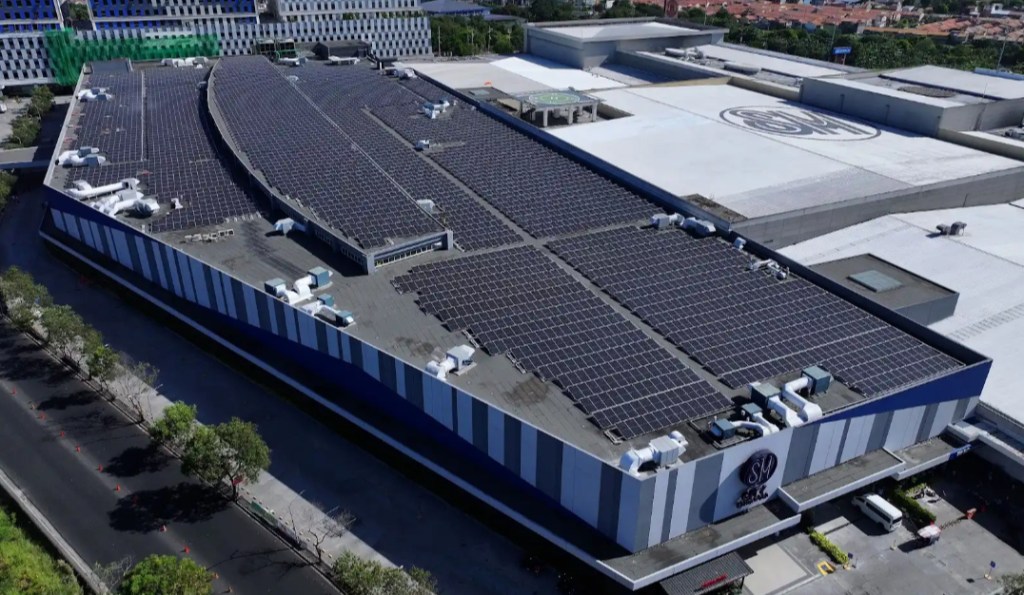
With a 3.785-Megawatt peak (MWp) solar power capacity, the SM City Fairview solar photovoltaic (PV) system has 6,882 solar modules over a total area of 4.3 hectares, currently making it the largest rooftop solar PV system on a commercial building in the country.

At SM City Baguio, water is given a second life. Its water treatment facility helps conserve this vital resource while supporting a greener, more resilient future.

At the Mall of Asia Complex, water trucks carrying 100% recycled water help keep the property’s greenery thriving while promoting responsible water use.

Bin it right! SM Cares promotes proper waste segregation with clearly marked bins for recyclables, disposables, and compostables—helping communities take part in building a waste-free 

SM Prime’s Hans Sy champions private sector leadership in disaster resilience at UNDRR Global Platform 2025

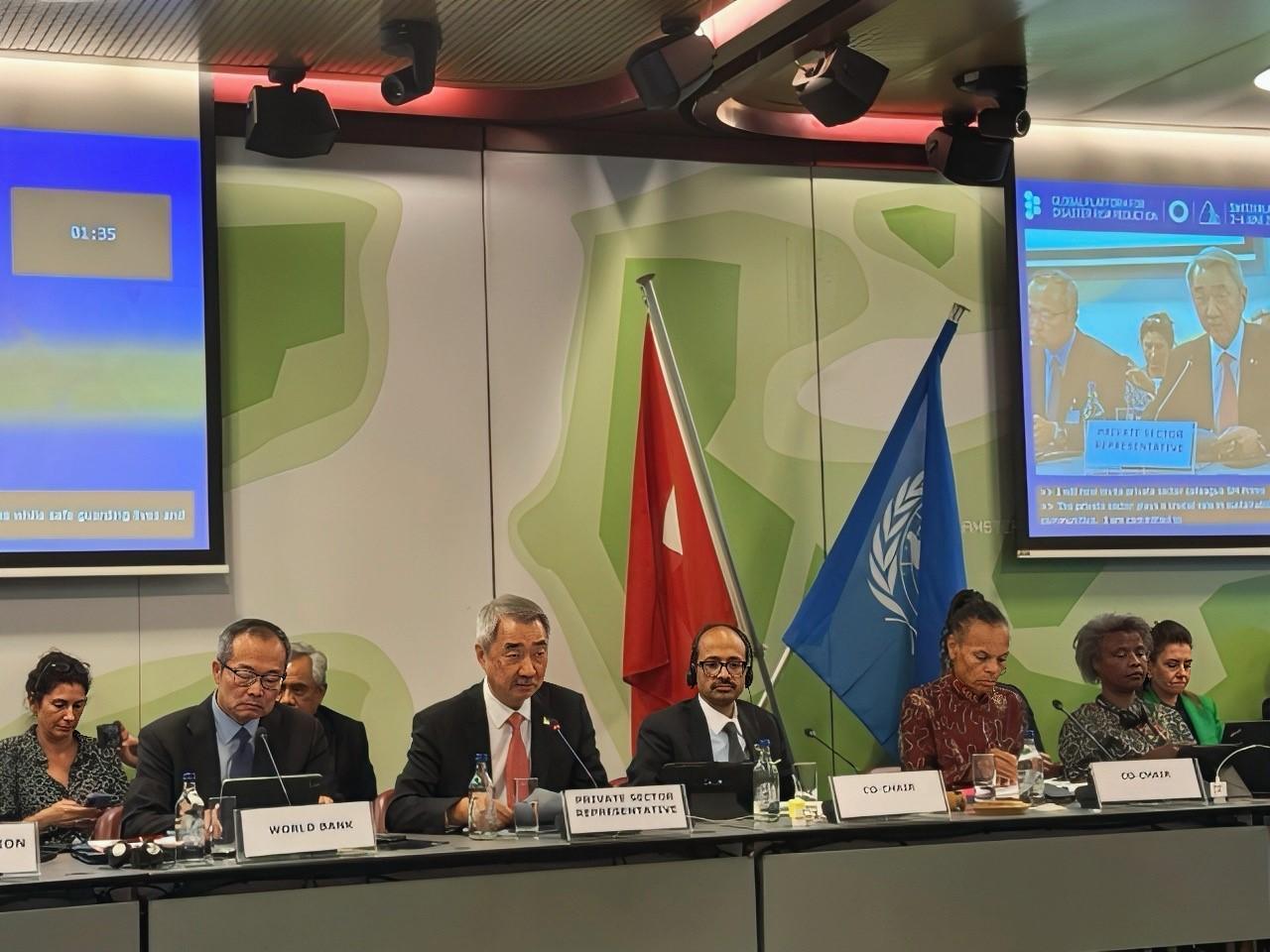
SM Prime Holdings, Inc. (SM Prime) Executive Committee Chairman Hans Sy reaffirmed the vital role of the private sector in disaster risk reduction (DRR) during the 2025 Global Platform of the United Nations Office for Disaster Risk Reduction (UNDRR), held in Geneva, Switzerland. 

Representing the Philippine private sector at the Ministerial Roundtable on “Accelerating Financing and Resilience,” Sy underscored how businesses can help drive scalable, science-based resilience solutions.

Private sector as a force multiplier in DRR

“Resilience strengthens businesses while safeguarding lives and communities,” Sy stated. “We know the government cannot do it alone. The private sector is ready to do more.”

A group of people sitting at a table

AI-generated content may be incorrect.

Sy underscores the need for policies, incentives, and institutional support to scale up disaster risk reduction investments at the UNDRR Global Platform 2025.

He cited SM Prime’s integrated approach to DRR, which includes allocating a significant portion of project costs to disaster-resilient infrastructure and applying science-driven planning frameworks. 

Sy also pointed to cross-sector initiatives such as the Adopt-a-City Program with the National Resilience Council and joint capacity-building programs with ARISE Philippines and the Department of Trade and Industry as examples of effective public-private partnerships.

Embedding resilience into core business strategy

In a High-Level Dialogue on scaling DRR financing, Sy outlined SM Prime’s approach to mainstreaming resilience across its developments. He highlighted features such as elevated mall structures, built-in rainwater catchment systems, and earthquake-resistant designs—solutions that have minimized disruption and enabled rapid recovery in the face of disaster.

“Disasters may be unpredictable, but their impacts don’t have to be,” he said. “We can—and must—prepare, mitigate, and adapt.”

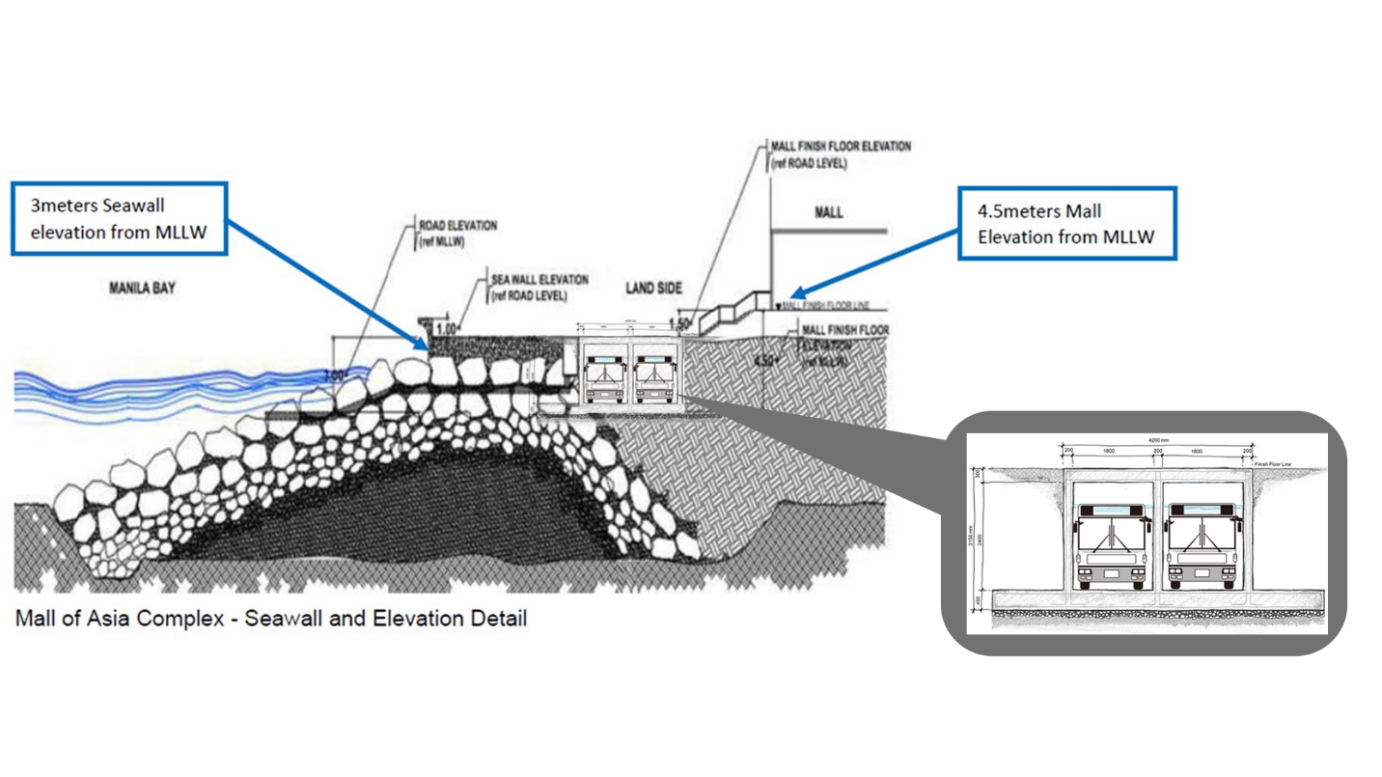
SM Mall of Asia Complex: A benchmark in resilience and innovation |  Philippines Graphic

The SM Mall of Asia Complex features a higher seawall and elevated design to guard against rising sea levels. (Inset) Deep, wide drainage channels—large enough to fit two buses side by side—further protect the area from storm surge flooding.

Call to scale resilience investment

To expand DRR financing, Sy called for enabling mechanisms that combine policy support, institutional cooperation, and targeted incentives. “From the standpoint of the private sector, financial, non-financial and regulatory incentives are among the most effective ways to accelerate investment in resilience,” he noted.

His remarks underscored the importance of collaboration, innovation, and long-term thinking in building resilient communities. SM Prime’s leadership in DRR continues to set a benchmark for sustainable development in disaster-prone regions.

“Together, we can embed resilience to build a sustainable and secure future for all,” he concluded.

Strengthening disaster preparedness: SM makes the Incident Command System possible

SM Supermalls conducts Incident Command System workshops to strengthen emergency response through structure, coordination, and accountability.

In a country like the Philippines, where typhoons, earthquakes, and other natural calamities are part of the norm, resilience is not just a necessity but a way of life. Ranked consistently high in the World Risk Index due to its location along the Pacific Ring of Fire and the typhoon belt, the nation faces challenges that demand coordinated, forward-thinking approaches to disaster preparedness and response. 

Among those leading the way is SM Supermalls, whose commitment to resilience continues to evolve through investments in systems that safeguard not only business continuity but, more importantly, the communities they serve.

Disaster resilience in the private sector has become increasingly crucial. Corporations have the capacity to create ripple effects both in terms of operational continuity and their influence on surrounding communities. For SM, a sustained and risk-informed approach to resilience ensures that when emergencies strike, response is swift, coordinated, and grounded in tested protocols.

A key initiative in this approach is the company’s very own rollout of the Incident Command System (ICS). Designed to provide a standardized structure for managing emergency response, the ICS originated in the United States and is widely recognized as an on-scene, all-hazard incident management concept. Through its unified hierarchy and clearly defined roles, the ICS ensures that different responders—from government agencies to private security teams—can act in sync. This leads to more efficient resource management, better communication, and a higher degree of accountability during high-pressure situations.

As part of the initiative, SM regularly implements emergency preparedness drills across its network of malls and consistently participates in nationwide efforts for disaster preparedness, such as the annual fire and earthquake drills led by the Bureau of Fire Protection (BFP). These efforts are complemented by support for the quarterly Nationwide Simultaneous Earthquake Drills led by the Office of Civil Defense (OCD) and the National Disaster Risk Reduction and Management Council (NDRRMC). These exercises include both employees and tenants, creating a culture of readiness that extends beyond corporate boundaries.

In addition, 79 SM Supermalls have been certified under the Business Continuity Management Systems—a reflection of the company’s structured and systematized approach to disaster risk reduction and recovery. This level of certification not only reflects internal diligence but also sets a benchmark for the broader business sector.

SM also has a dedicated resilience center, which operates as a centralized communications hub during large-scale disruptions. This facility coordinates with all SM malls to ensure rapid information flow and streamlined decision-making in the event of a national emergency.

SM’s collaborative approach to disaster resilience was also demonstrated during the 2024 Asia- Pacific Ministerial Conference on Disaster Risk Reduction in Manila. On the last day of the conference, SM City Clark became the focal point of an ICS demonstration attended by the United Nations Office for Disaster Risk Resilience and foreign delegates.

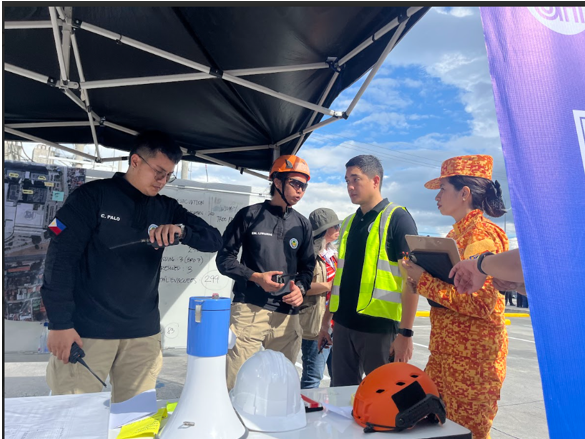
The event showcased a unified response involving mall management, the Clark and Angeles municipalities, the BFP, OCD Region 3, and NDRRMC. Together, they enacted coordinated procedures designed to enhance public safety, offering an up-close look at how integrated disaster response works in a real-world environment.

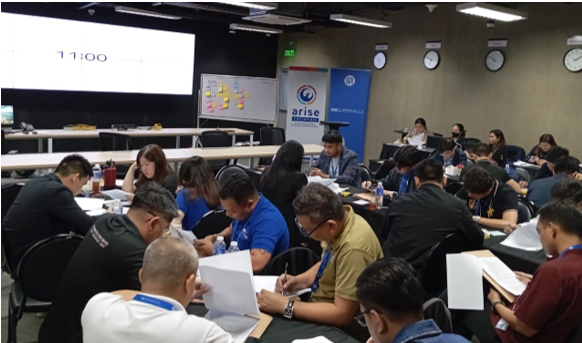
In preparation for the site visit, SM Supermalls partnered with ARISE Philippines, the Private Sector Alliance for Resilient Societies, to conduct an ICS workshop alongside the OCD. This training brought together heads of operations, human resources, security, and Information Technology from SM City Clark and nearby locators such as Park Inn Hotel. Facilitated by experts from the BFP and the Philippine Army, the workshop provided hands-on training in ICS protocol, further reinforcing the company’s commitment to capacity-building at the local level.

Participants of the Incident Command System workshop learn the chain of command and roles essential for managing emergencies.

The Incident Command System is showcased in an emergency simulation at SM City Clark during the Asia-Pacific Ministerial Conference on Disaster Risk Reduction.

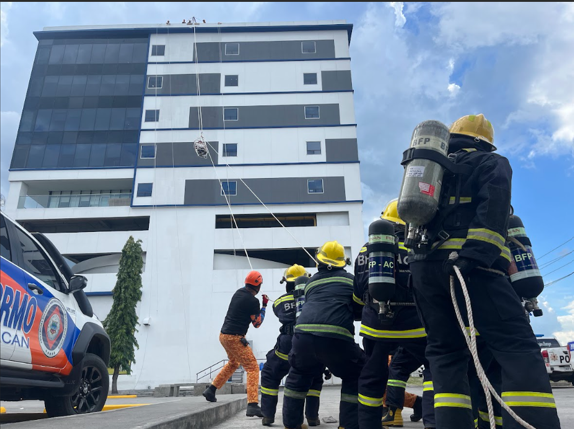
Public and private sector teams implement the Incident Command System as the Bureau of Fire Protection showcases high-angle rescue at SM City Clark.

SM’s vision for resilience is expansive and continuous. Following the success of the Clark initiative, the company is now preparing to roll out the next phase of ICS workshops, beginning with SM Mall of Asia and expanding to regional malls across the country. This nationwide implementation reflects a long-term strategy that prioritizes safety, community cohesion, and operational readiness.

“By investing in frameworks like the ICS, SM Supermalls demonstrates that resilience is not a reactive measure but an ongoing commitment,” said SM Supermalls Vice President Engr. Liza Silerio. “In a landscape defined by environmental vulnerability, this commitment provides not only peace of mind but a tangible sense of preparedness for employees, tenants, and the public at large.”

Through proactive strategies and sustained partnerships with government and civil society, SM is building more than safe spaces. It is also cultivating a culture of resilience that empowers people and protects communities in the face of any uncertainty, reiterating its commitment to promoting a more disaster-ready Philippines.

SM Prime’s Renewable Energy Leadership in Sustainable Development

For SM Prime, sustainability is not merely a statement, but a strategic imperative that is deeply embedded in the way the company operates. This is demonstrated in concrete outcomes that reflect the organization’s innovation and leadership when it comes to its environmental efforts, continuously delivering measurable progress in advancing sustainability across its developments.

Anchored in its Net Zero 2040 goals, SM continues to strengthen its commitment to environmental sustainability through the scaled deployment of renewable energy solutions in its properties, integrating solar energy to mitigate greenhouse gas emissions and reduce reliance on grid-supplied fossil fuels, while aligning its operations with global climate goals.

As of early 2025, a total of 47 SM Supermalls nationwide are now outfitted with solar photovoltaic (PV) systems, generating a combined peak capacity of 63 Megawatts. These systems comprise 118,313 solar panels installed across mall rooftops, contributing to a measurable reduction in carbon emissions and representing a significant benchmark in the advancement of renewable energy adoption within the Philippine commercial real estate sector.

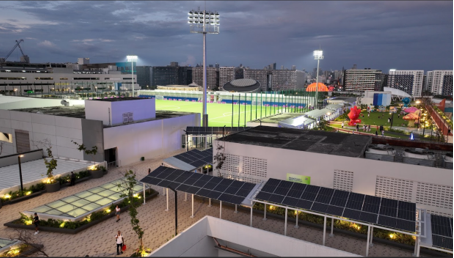
With the MOA Sky walkway, SM Mall of Asia harnesses solar energy to deliver a combined 3MW of power —enough to run 1,000 escalators a day or power 1,800 homes for a month.

SM Mall of Asia’s MOA Sky showcases a multi-use rooftop with a solar-covered walkway, contributing to their significant renewable energy capacity.

SM Mall of Asia (MOA), one of the company’s flagship developments, exemplifies this commitment through its multi-use rooftop, MOA Sky. Among its features is a solar-covered walkway integrating 555 PV panels, contributing an additional 0.3-Megawatt peak capacity while offering shade to pedestrians. With a total of 11,355 panels now installed, SM MOA’s cumulative solar PV system delivers 3 Megawatts of peak power—enough to operate approximately 1,000 escalators for a day or provide electricity to 1,800 average households for a month.

SM’s renewable energy projects were prominently featured during the 2025 Energy Efficiency Day conference, where SM Engineering, Design, and Development Corporation Vice President Engr. Teodoro Bautista presented the group’s performance and ongoing efforts in operational energy efficiency. The initiative was also a key factor in SM MOA’s recognition as the recipient of the first Sustainable Energy Award for a Private Institution, organized by the Department of Energy, affirming the commercial viability and environmental value of large-scale solar adoption.

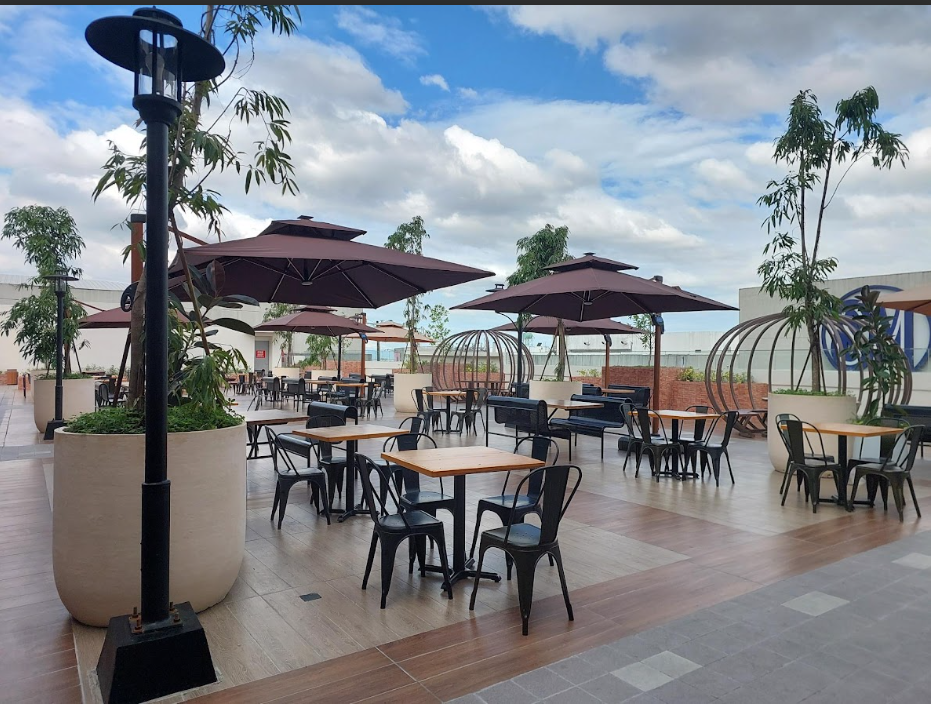
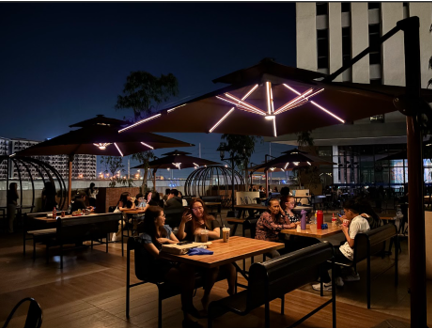
Solar-powered parasols at SM City Bicutan’s Sky Garden provide 4–5 hours of nighttime lighting after just 3 hours of daytime charging.

Integrating sustainability, SM City Bicutan offers solar-powered parasols with nighttime illumination in its Sky Garden.

Meanwhile, another SM mall, SM City Bicutan, recently introduced solar-powered parasols within its Sky Garden. These structures, designed with both function and form in mind, utilize solar energy to provide 4 to 5 hours of nighttime lighting after a 3-hour daytime charge. Beyond their energy efficiency, these installations reinforce the importance of integrating environmental considerations into the customer experience.

“Through these initiatives, we are able to significantly reduce our carbon footprint and create long-term operational savings for our malls, while simultaneously introducing innovative solutions towards a greener and brighter future for everyone,” said SM Supermalls President Steven Tan.

SM Prime’s transition to renewable energy is a key component of its climate action strategy under the Net Zero 2040 roadmap. Through systematic decarbonization across its portfolio, the company continues to play a leading role in supporting national and global climate targets while delivering measurable sustainability outcomes that leave a lasting positive impact on the environment.

Recycle & Earn: SM Supermalls’ Nationwide Trash to Cash Program

Every first Friday and Saturday of the month, SM Supermalls transforms into a hub of sustainability through its nationwide ‘Trash to Cash’ (TTC) recycling market, where individuals can exchange recyclable waste for cash. This initiative, part of SM Supermalls’ Waste-Free Future campaign, has been a long-running program since 2007 that encourages waste segregation, recycling, and environmental awareness while also benefiting communities financially.

Held across 87 SM malls nationwide, the TTC program provides a convenient and accessible platform for shoppers, tenants, and local communities to participate in sustainable waste management. By ensuring that recyclables are properly sorted and repurposed, TTC actively contributes to the circular economy, reinforcing SM Supermalls’ commitment to responsible environmental stewardship.

Encouraging sustainable habits with tangible impact

The impact of TTC has been remarkable. In 2024 alone, the initiative successfully collected more than 12 million kilograms of recyclables, generating a total of over ₱28 million in earnings for participants. This is equivalent to 204,000 trees saved if all recyclable wastes are paper or a reduction of 18,000 tons of carbon emission if all recyclable wastes are plastic. More than just a recycling initiative, TTC empowers individuals, organizations, and businesses by making sustainability a rewarding and community-driven practice.

“TTC is more than just a recycling program—it’s a movement that enables communities to turn environmental responsibility into real opportunities. By participating, people not only contribute to waste reduction but also gain financial incentives, proving that sustainability can be both impactful and rewarding,” said SM Supermalls President Steven Tan.

A student weighs recyclables with his teacher at SM Cares’ Trash to Cash, proving that every small effort adds up to a greener future.SM employees and tenant partners join in by bringing piles and bags of recyclable waste.

A caring call to action: Be part of the change

As climate challenges continue to grow, initiatives like TTC show that small actions, when done collectively, lead to significant environmental impact. By participating in this program, individuals can contribute to the fight against waste pollution, support the circular economy, and take a meaningful step toward a more sustainable future.

Students, who brought in their trash, receive cash incentives from SM personnel for their commitment to a sustainable future.Segregating our trash plays a vital role in diverting waste from the landfills.

How to participate in Trash to Cash

With TTC locations spread nationwide, SM Supermalls provides convenient drop-off points where customers can properly dispose of materials such as paper, plastic bottles, and other recyclable waste. Joining the TTC movement is easy. Segregate your recyclable waste and bring them to any participating SM mall. You can visit the SM Supermalls official website for ways to contribute to a cleaner, greener future. 

To learn more about TTC and other sustainability initiatives under SM’s Waste-Free Future campaign, follow @SMCaresOfficial on social media. 

How SM Prime is Leading Water Conservation Efforts

Access to clean and potable water is one of today’s most pressing challenges, with rapid urbanization and population growth straining freshwater resources. United Nations (UN)-Water emphasizes that effective water management is crucial for society and the environment.

SM Prime Holdings, Inc. (SM Prime), a leading integrated property developer in Southeast Asia, has prioritized water conservation and management since the early 1990s—long before water stress and its link to climate change became widely recognized.

Through Water for Tomorrow, SM Prime’s water stewardship campaign, the company actively integrates climate resilience into its developments, ensuring responsible resource management while supporting the well-being of the communities it serves.

Sustainable water management

Water conservation measures and efficient management systems are embedded in SM Prime’s building operations. The company invests heavily in sustainable water management technologies to reduce freshwater use and the demand for municipal water supply. It has identified practical water usage and innovations to address the growing concern of water security. 

In 2023, SM Prime’s reported total water consumption amounted to 7.2 million cubic meters, with 61% of that consumed water being recycled. 

On average, more than 1 billion gallons of recycled water is used for mall operations. SM Supermalls uses recycled water for cleaning and sanitation, caring for its plants and landscaping, and cooling its air conditioning towers.  Efficient plumbing and innovative water-saving technologies with low-flow fixtures also regulate the mall’s water consumption. 

These practices have been scaled throughout the group. The SM Offices’ E-Com Centers in the Mall of Asia Complex have sewage treatment plants that recycle greywater. Aside from rainwater harvesting systems that help maintain its urban gardens, SM Development Corporation (SMDC)’s Sea and Shore Residences donate its discharged treated water to the greening of the Estates in the MOA Complex. 

As part of its water conservation program in Pico Sands Hotel, SM Hotels and Convention Corporation reduced its freshwater consumption by 36%, reaching 52% water reuse and 41% for Pico de Loro Beach and Country Club. Together with Hamilo Coast, SM Prime’s luxury and leisure estates in Nasugbu, Batangas, its water desalination plant has made significant impacts on water management and sustainable eco-tourism since 2010, ensuring that it services all developments that call Hamilo home. 

Protecting water resources 

SM Prime supports this year’s UN-Water World Water Day 2025 on March 22, which focuses on the theme “Glacier Preservation.” 

Halfway around the globe, glaciers play a critical role in the global water cycle.  Glacial ice is the largest reservoir of fresh water, holding about 69% of the world’s fresh water. With rapid glacial melting, altered rainfall patterns, droughts, and rising sea levels, the planet risks a water crisis that affects the most vulnerable.

Recognizing these challenges and the need for a reliable water supply, SM Prime continues to integrate water-efficient systems in its property developments. This helps create public awareness and encourages responsible water use among mallgoers, tenants, employees, and communities. In 2023, SM Supermalls’ SM City Baguio rainwater treatment facility (RTF) was launched to help reduce dependence on freshwater sources. It has treated 17,000 cubic meters of rainwater into potable water and continues to operate and serve its host community. 

SM Prime’s Water for Tomorrow program plays a key role in SM Prime’s sustainability strategy, along with Net Zero by 2040 and a Waste-Free Future. 

“As businesses face growing water challenges, we must take action to secure our Water for Tomorrow,” said Hans T. Sy, SM Prime Executive Committee Chairman.

“Water stewardship is an investment in our future. We must move beyond conservation and prioritize resource protection, waste reduction and water security for future generations,” he added. 

SM City Baguio’s rainwater treatment facility (RTF) utilizes a rigorous six-step treatment process with real-time monitoring to ensure processed water meets potability requirements, and its service to the community was recognized at the 2024 Asia Pacific Tambuli Awards.

Headquarters to some of the largest Business Process Outsourcing (BPO) and Knowledge Process Outsourcing (KPO) brand names, the Three Ecom Center at the Mall of Asia Complex efficiently operates its sewage treatment plant to collect, treat, and remove contaminants from wastewater, making it safe to discharge to the surrounding environment.

Pico Sands Hotel – SM Hotels

Pico Sands Hotel has reduced water consumption by advocating towel and linen reuse, inviting guests to join its sustainability journey and conserve water.

Hamilo Coast’s desalination plant provides sustainable water to its community, serving residences, hotels, staff housing, and offices since 2010.

SM Development Corporation (SMDC)’s Sea and Shore Residences donate their treated wastewater to green the landscape of the Estates in Mall of Asia Complex.

Transforming Waste: SM’s Innovative Recycling and Composting Efforts

The SM Waste-Free Future initiative endeavors to reduce waste generation and increase the rate of diversion.

It is not “out of sight, out of mind”; landfills are not just eyesores in remote areas, but they also pose a significant health risk to the communities around them and emit a substantial amount of greenhouse gases from decaying food waste.

The RDC, or Recyclable, Disposable, and Compostable bins at SM Supermalls, are not only for show but serve as the start of the journey to achieve a net-zero landfill and beyond.

SM has recycled 130,250kg of its internal non-essential documents through its bulk paper recycling program.

SM’s environmental programs, such as the monthly Trash to Cash recycling market, continue to support communities towards sustainable living.

For recyclable waste, SM has initiatives like the “Trash to Cash” recycling market, which successfully gathers over 1 million kilograms annually of plastic, paper, and other materials for reuse or recycling. The program aims to reduce solid waste pollution and promote a circular economy within communities. SM understands the importance of segregating at the source, and the company does this through partnerships with various companies, such as Trust International Paper Corporation for internal bulk paper recycling. The program has avoided landfill waste equivalent to the annual waste of more than 3,000 households while ensuring recyclables are properly processed.

For disposable, non-recyclable waste, SM Prime formed a joint venture with the Japanese environmental solutions company GUUN to establish SM GUUN Environmental Company, Inc. (SGECI). This partnership enhances its waste-to-fuel factory to convert non-recyclable waste, like single-use plastics, non-recyclable paper, and used rags, into cement fuel called “fluff fuel” to reduce coal usage. The “fluff fuel” produced is then used by eco-conscious cement companies like APO Cement, Holcim, and Taiheiyo Cement in a practice they call “co-processing,” where the ash from the fuel is also used as a cement ingredient, making it an integral part of the waste reduction ecosystem.

In 2024, SM GUUN Environmental Company converted over 6,000 metric tons of non-recyclable waste into “fluff fuel,” avoiding the annual landfill burden for 12,000 households. The Department of Environment and Natural Resources (DENR) recently visited the facility and recognized its significance to various stakeholders, particularly in the reduction of their carbon footprints and the efficient management of solid waste. 

In 2024, SM GUUN enabled the conversion of 6,000 metric tons of non-recyclable waste into fuel for cement companies.

SM GUUN’s Cebu plant is capable of processing 50-70 tons of waste daily.

Department of Environment and Natural Resources (DENR) representatives, led by Assistant Secretary and concurrent Bureau Director Jaqueline Caancan were joined by the National Solid Waste Management Commission Head Engr. Vizminda Osorio and DENR Environmental Management Bureau (EMB) Central Visayas Regional Director Ma. Victoria Abrera in a recent visit to SM GUUN Environmental Company in Consolacion, Cebu.

For compostable waste, SM GUUN is experimenting with a Singaporean system for its malls and hawker centers that transforms compostable food residues into landscape soil, achieving over 70% volume reduction within 48 hours. This helps create new soil for gardens, parks, and golf courses, thereby reducing the burden on landfills and contributing to soil health and urban greenery.

SM has other customer-facing programs on solid waste management, like the Plastic Waste Collection program, E-Waste Collection, as well as awareness campaigns for clean water bodies and regular estero and coastal cleanup activities. These programs are also done to support the government in promoting responsible solid waste management through RA 9004, RA 11898, and similar laws.

With solutions identified, the journey towards SM’s #SMWasteFreeFuture becomes more realistic. It needs the help of everyone–from the proper way we “Bin it Right” to the further development of waste solutions to create an ecosystem of recovery and consumption where the word “waste” can be a thing of the past. Let’s do our part for the journey to a “waste-free future.”

SM strengthens pivot to solar PVs in support of DOE’s renewable energy goals

A large building with many buildings and trees

AI-generated content may be incorrect.

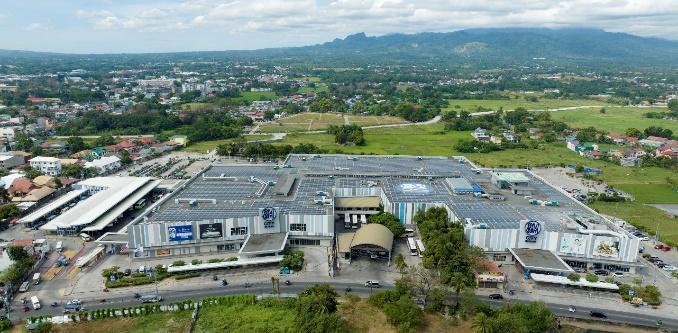
SM City Bataan and its 4,060-piece solar photovoltaic (PV) panels have a peak capacity of 2,376,000 kW.

As the world continues to grapple with depleting resources, the need for renewable energy has never been more urgent. Malls, as significant energy consumers, have a unique opportunity to lead the charge towards a greener, more sustainable future by adopting renewable energy solutions that can significantly reduce their environmental impact.

Understanding this, SM has been continuously ramping up its renewable energy initiatives by adopting solutions that lower its carbon footprint. One such solution is the adoption of solar photovoltaic (PV) systems, which provide clean and renewable energy by converting sunlight directly into electricity. This allows SM to reduce its reliance on fossil fuels, lower energy costs, and contribute to a greener environment.

Expanding solar power across SM malls

As of February 2025, SM is nearing full operations for the solar PV systems installed in 45 of its properties across the country, with more slated for retrofitting soon.

SM’s use of solar PV systems is just one of the many ways the company has been taking a more sustainable approach to energy use while supporting the country in achieving its sustainability goals. Its efforts continue to be recognized by reputable institutions both locally and internationally. 

Industry recognition for SM’s sustainability efforts

For instance, SM’s flagship mall, SM Mall of Asia, was recognized at the 2024 Energy Efficiency Excellence Awards and Sustainable Energy Awards organized by the Department of Energy (DOE). It won the Sustainable Energy Award for a Private Institution for its solar PV system, which is capable of generating 2.7-megawatts (MW) of peak energy—enough to power 1,790 households for an entire year. 

Meanwhile, SM City Butuan was recognized under the New and Existing Building category at the Association of Southeast Asian Nations (ASEAN) Energy Awards 2024 Best Practices Competition for Energy-Efficient Buildings. Endorsed by the DOE to represent the Philippines, the mall was honored for advancing energy efficiency and conservation (EEC) innovations in its design and operations.

Supporting the DOE’s Renewable Energy Roadmap

Alongside its efforts to integrate renewable energy sources into its operations, SM is also committed to supporting the DOE in achieving its targets under the Renewable Energy Roadmap 2017-2040, particularly its goal to increase the country’s renewable energy installed capacity to at least 20,000 MW by 2040.

A building with cars parked on the side

AI-generated content may be incorrect.

SM City Tanza is one of the 45 SM malls with solar photovoltaic (PV) panels, numbering 2,286 units, which will produce 1,257.30 kW peak solar power.

Public-Private Partnerships for a sustainable future

SM collaborates with partner solar PV system providers under the Energy Regulatory Commission (ERC) Distributed Energy Resources program. These service contracts define the conditions of the partnership, project timelines, and the assigned malls for each provider, aligning with SM’s adoption of renewable energy.

“At SM, sustainability is a commitment. Our growing solar portfolio demonstrates our dedication to a greener future for the Philippines, in partnership with the DOE and our valued partners,” shared SM Supermalls Vice President for Corporate Compliance Group Engr. Liza Silerio.

 “Together, we’re not just generating cost savings – we’re shaping a more sustainable future by supporting long-term environmental goals of our partners while contributing to the Philippines’ green transition,” said Green Heat Corporation Director Glenn Tong. Green Heat is one of SM’s solar PV system providers.

A large building with many parking lots

AI-generated content may be incorrect.

SM City Butuan with its solar photovoltaic (PV) panels. 

A model for sustainable development

Beyond its environmental and economic benefits, SM’s implementation of solar PV systems serves as a progressive model for public-private partnerships (PPPs). By collaborating with the DOE, SM gains access to technical expertise and financial incentives while helping the country meet its sustainability goals. This approach promotes innovation, creates jobs, and sets a precedent for other commercial establishments to follow.

DOE’s support for sustainable energy development

“The DOE has implemented sustainable energy development strategies and institutionalized national and local capabilities, and we are heartened by the strong support we have received from both the private and public sectors,” said DOE Undersecretary Rowena Cristina Guevara in her opening address at the Sustainable Energy Awards. 

To learn more about SM’s various sustainability initiatives, visit www.smsupermalls.com/smcares.

A brighter 2025 for Filipinos: SM Prime evolves with renewable energy

Imagine a world powered by the sun, the ultimate source of life. As climate change worsens due to fossil fuel use, sustainable energy alternatives are more crucial than ever. The Philippines, with its abundant sunlight, is uniquely positioned to harness solar power and help combat climate change. In 2024, Manila experienced around 4,440 hours of daylight, which translates to a significant potential for solar energy production.

SM Prime recognized this potential early on. In 2014, SM North EDSA became the first commercial property in the Philippines to install solar photovoltaic (PV) panels on its roof, achieving the largest installation in Southeast Asia at the time. This move signaled the beginning of SM Prime’s commitment to renewable energy and energy efficiency.

SM Supermalls President Steven Tan explains, “SM’s environmental sustainability began with energy and water conservation. Revolutionizing our malls’ energy efficiency through renewable sources magnifies our responsibility to serving people and the planet.”

Today, SM Supermalls operates 44 malls with solar PV systems, generating a combined peak energy of 51.6 megawatts (MW). The largest installation is at SM City Santa Rosa. With a total of 96,000 solar panels across malls in Luzon and Visayas, SM Prime holds the Philippines’ largest solar energy portfolio, covering around 33 hectares. These efforts are a vital part of the company’s Net Zero by 2040 strategy, aimed at reducing its carbon footprint.

This 51.6 MW capacity significantly cuts carbon emissions, providing clean energy that powers thousands of homes or removes thousands of cars from the roads. It also reduces the need for coal, offering environmental benefits for both the planet and local communities.

The solar power generated directly fuels essential mall operations like lighting and escalators, reducing SM Supermalls’ reliance on the national grid. This, in turn, helps stabilize the power supply, reducing the risk of outages and easing the burden on electricity providers. By tapping into clean, renewable energy, SM Prime is contributing to a more sustainable future for the Philippines.

SM Prime’s sustainability efforts extend beyond solar energy. The company also focuses on waste management, water conservation, and air quality initiatives, all designed to minimize environmental impact. Through these comprehensive measures, SM Prime strives to create a positive change while ensuring responsible, innovative operations.

In sum, SM Prime’s large-scale adoption of solar PV systems, combined with its broader environmental initiatives, exemplifies its dedication to creating a sustainable future for the Philippines. By leading in renewable energy and sustainability, SM Prime is helping pave the way for a cleaner, greener, and brighter tomorrow.